

Arm Compression Sleeves For Lymphedema / Compression Sleeve For Arm Lymphedema
How To Use Arm Compression Sleeves For Lymphedema
An arm compression sleeve can be described as a snugly fitting, elastic garment that is worn to provide arm compression through targeted, graduated pressure which is beneficial for a variety of applications. For athletes, compression sleeves can help with performance and recovery by reducing muscle fatigue, enhancing circulation and regulating temperature. A compression sleeve can also assist with pain management and injury support by providing warmth and stability to manage aches and conditions resulting from overuse, and to help provide joint and tendon relief and by easing symptoms of chronic conditions such as arthritis.
In medical and therapeutic applications compression arm sleeves are primarily used for post-surgical support and lymphedema management.
Post-Surgery Support
Designed to provide gradient pressure to your arm, compression arm sleeves are used to prevent or control severe swelling in the arms following breast cancer surgery, radiation, or trauma. A medical-grade compression sleeve can help reduce post-operative swelling and aid in the healing of sensitive tissue.
Lymphedema Management
Compression sleeves for arms have become the gold standard for treating lymphedema in arms. When worn as a lymphedema compression sleeve, an arm compression sleeve will provide gradient pressure to your arm for treating and managing swelling (edema) caused by lymphedema.
What Is Lymphedema
Lymphedema
Lymphedema occurs when the lymphatic system is damaged or compromised, resulting in the disruption of the lymphatic flow (of lymph fluid) moving through the body. When this disruption occurs, there is a build-up of the lymph fluid in the fatty tissues just under your skin that causes swelling (edema), which is referred to as lymphedema.
In addition to swelling, the accumulated excess lymph fluid can cause your skin to become thickened or hardened, and creates a breeding ground for bacteria that makes the affected area susceptible to skin infections (cellulitis). If left untreated, cellulitis can spread to the bloodstream and create potentially life-threatening conditions. The skin in the affected area may also become compromised, resulting in leakage of the lymph fluid, especially in cases where the skin is extremely swollen.
Read more about lymphedema.
What Is The Lymphatic System
The lymphatic (or lymph) system is comprised of lymphatic vessels that contain lymph fluid which travels throughout the body and ultimately flows into the lymph nodes, that are the organs which filter and clean the system. The small, bean-sized lymph node glands are found in many parts of the body, including the neck, armpit, chest, abdomen (belly), and groin.
The lymphatic system is an integral part of your body's detoxification and immune system as the lymph system plays many important roles in your body, including:
- helps maintain the right balance of fluids in your body
- transports nutrients and immune cells that help protect you from viruses, bacteria, and other invaders
- filters out germs, toxins and waste
When infections, diseases, injuries or trauma cause your lymphatic system to stop functioning properly, you may develop lymphedema. With this condition, the lymph fluid is unable to properly move within the lymphatic system, and the fluid builds up in your tissues, causing swelling (i.e., lymphedema).
Primary Lymphedema vs. Secondary Lymphedema
While most lymphedema occurs as the result of damage to the lymphatic system, often the result of treating cancer (secondary lymphedema), people can be born with a compromised lymphatic system (primary lymphedema). Primary lymphedema is caused by rare genetic conditions that prevent the lymphatic system from developing properly.
Cancer treatment increases the risk for developing secondary lymphedema as the cancer treatment procedures can disrupt or damage the lymphatic system. The damage to the lymphatic system often happens with cancer treatments like radiation therapy and surgery, since these procedures can impact your lymph nodes and the surrounding vessels.
Where Does Lymphedema Commonly Develop
Lymphedema will usually occur and affect the arms and hands, and legs and feet, and while less common, lymphedema can also develop in the head, neck (head and neck lymphedema), breasts and chest (breast lymphedema), abdomen, back, and genitals (genital lymphedema).
The Role of Compression Sleeves For Treating Lymphedema In Arms
What Are Compression Arm Sleeves
Arm compression sleeves for lymphedema are tight, bands of woven elastic fabric that you wear on your arms for providing gradient pressure to your arm to treat and manage swelling (edema) caused by lymphedema. While these compression sleeves are available in a variety of materials, colors, and styles, they are all designed with same purpose in mind; applying pressure that forces the lymph fluids to move up and out of your arm, preventing it from accumulating and causing swelling.
See the wide variety of compression arm sleeves that we offer.
How Do Compression Sleeves Work
While there are a variety of fabrics, styles, and features available with compression sleeves, a compression arm sleeve (lymphedema sleeve) is designed to provide graduated pressure (compression) to your arm for managing lymphedema. Graduated pressure means that the compression sleeve is tighter at the wrist and becomes gradually looser toward the upper arm. The design of an arm compression sleeve therefore creates external pressure that is greater at your wrist and decreases upwards along the length of your arm, causing trapped lymph fluid to drain away from tissue and forcing the trapped lymph fluids up and out of your arm. The external pressure provided by the compression sleeve also helps to prevent further build-up of lymph fluid which causes swelling.
What Does Graduated Compression Mean With Compression Arm Sleeves
Compression sleeves for arms are designed to provide graduated pressure, which means that the compression sleeve is tighter at the wrist and becomes gradually looser toward the upper arm. These compression sleeves are available in different levels of pressure, with each level determining how much arm compression the sleeve will provide. In simple terms, the higher level of compression, the tighter the arm compression sleeve will be.
The compression applied by the compression sleeve is measured in mmHg (millimeters of mercury), which is the same measurement that is used for measuring blood pressure. The four levels of pressure in U.S. manufactured compression sleeves are:
- class 0 compression sleeve (exerts 15 mmHg to 20 mmHg of pressure)
- class 1 compression sleeve (exerts 20 mmHg to 30 mmHg of pressure)
- class 2 compression sleeve (exerts 30 mmHg to 40 mmHg of pressure)
- class 3 compression sleeve (exerts 40 mmHg to 50 mmHg of pressure)
Note that some compression sleeves for arms reflect European compression standards as to the amount of graduated pressure they provide. The European classification system is:
- class 1 compression sleeve (exerts 18 mmHg to 21 mmHg of pressure)
- class 2 compression sleeve (exerts 23 mmHg to 32 mmHg of pressure)
- class 3 compression sleeve (exerts 34 mmHg to 46 mmHg of pressure)
What Level Of Compression Should I Choose For My Lymphedema Sleeve
When choosing a lymphedema compression sleeve it is very important to choose the correct compression level that’s required for your lymphedema treatment or compression therapy. Generally, more severe cases of lymphedema will require class 3 compression sleeves, and milder cases of lymphedema require class 1 or 2 compression sleeves. Compression sleeves for arms that exert as little as 15 mmHg to 20 mmHg are suited for very mild cases of lymphedema, or those who are at risk of developing lymphedema.
The following are the different compression classes of compression sleeves, and what they are typically recommended for:
- Compression Class 0: 15 - 20 mmHg – for those at risk for lymphedema
- Compression Class 1: 20 - 30 mmHg – for those at risk for lymphedema or for mild lymphedema
- Compression Class 2: 30 - 40 mmHg – for those with moderate or severe lymphedema
- Compression Class 3: 40 - 50 mmHg – for those with severe or hard to control lymphedema
You should always speak with your healthcare provider regarding the best compression level for you and your individual health condition.
Types Of Arm Compression Sleeves For Lymphedema: Daytime vs Nighttime
Arm compression sleeves are primarily designed for daytime use, and it is not generally recommended that you wear your compression sleeve at night while sleeping. Compression sleeves are designed to work against gravity while standing, when your body needs external help to promote fluid flow upwards. Wearing your arm compression sleeve overnight while lying down when gravity is not an issue, the arm compression sleeve provides unneeded compression or pressure points, especially if it slips or bunches up, which can actually restrict circulation.
Additionally, your skin will need time to breathe and relax from the constant pressure and external force that your lymphedema sleeve is creating on your arm. Taking time off from wearing compression sleeves for arms at night or during periods of rest or low activity will provide your skin with the break that it needs to avoid skin irritation, and reduces the risk of fungal infections and rashes.
If you do need continuous, around the clock arm compression, there are specialized compression sleeves for ams designed specifically for nighttime wear and during periods of rest or low activity.
Daytime arm compression sleeves
A daytime compression arm sleeve is tighter at the bottom (at the wrist) and gradually loosens along the length of the sleeve as nears the top (at the upper arm), creating gradient pressure that helps the movement of lymph fluid upwards and out of the arm. These compression sleeves work on the concept of resting and working pressure. Resting pressure is the force that the compression sleeves apply to your arm while the muscles are relaxed, while working pressure is a higher force that is created when your arm muscles are moving. The interaction of working and resting pressure creates a pump-like reaction that helps promote the movement of lymph fluid.
Nighttime arm compression sleeves
Nighttime compression sleeves for arms are designed to be larger and bulkier, allowing them to fit a little looser than daytime compression sleeves. Typically made with foam and padded materials, the nighttime compression arm sleeves are soft to wear and provide continuous gentle pressure to your arm. Unlike daytime compression sleeves which are designed to actively promote the flow of lymph fluid out of your arm, a nighttime lymphedema compression sleeve is worn to prevent the lymph fluid from reaccumulating in your arm while you are sleeping.
Key features of nighttime compression arm sleeves include:
- Breathable cooling fabrics: Moisture-wicking fabrics help dissipate heat to prevent sweating and promote dry wearing comfort while sleeping
- Soft quilted out shell design: Thick, padded quilt outer shells offer comfort and flexible movement to aid sleeping
- Padded foam inner construction: more comfortable to wear while creating a gentle micro-massage effect that targets hardened fibrotic tissue and helps stimulate lymph flow
- Anatomical fit: Designed to fit anatomical structures of your arm and hands to enhance wearing comfort
- Channeled structure: helps promote the flow of lymph fluid out of your arm
- Gentle compression: Lower pressure prevents construction and allows skin to recover
The Role Of Compression Arm Sleeves In Lymphedema Prevention
If you have had lymph node removal or are recovering from breast cancer treatment, you have a higher risk of developing lymphedema. Lymphedema cannot be cured, but there are a number of steps that you can take to help prevent lymphedema if you are in the high risk category for lymphedema developing:
- Diet and exercise to maintain body weight
- Avoid vigorous or excessive exercise
- Maintain skin health and protect your skin from injury or infection
- Avoid extreme temperatures or sun exposure
- Avoid construction or pressure on your arm
- Elevate your arm
- Wear light compression during air travel and long periods of inactivity
While wearing an arm compression sleeve is a common treatment for arm lymphedema, an arm compression sleeve can also be prescribed as a preventative treatment against the development of lymphedema. Studies have shown that wearing a compression arm sleeve can help prevent the development of lymphedema, reduce symptom severity, or stop progression of arm lymphedema into a more severe stage, helping you avoid chronic lymphedema.
Read more about cancer treatment and the risk for lymphedema.
Bottom Line: Crucial Tips for Success For Wearing Compression Arm Sleeves For Lymphedema
To ensure that you receive the maximum benefit from your lymphedema sleeve, we recommend you consider the following steps:
Choose the proper compression: Consult with your healthcare provider to ensure that you choose a lymphedema compression sleeve that provides you with the correct level of gradient compression for your particular needs.
Ensure you have a proper fit: This is one of the most important steps for effective compression therapy for lymphedema. Wearing a poorly fitting compression arm sleeve can actually make your condition worse. If your arm compression sleeve is too tight, it can:
- restrict circulation and lymphatic flow
- increase swelling
- damage soft skin tissue
- cause tingling or numbness
When arm compression sleeves for lymphedema are too loose, they can:
- slide or bunch, which can restrict circulation and lymph flow
- provide ineffective compression therapy
- cause skin irritation, rashes or abrasions
Actively wear your compression arm sleeve: Generally, compression arm sleeves should be worn during all waking hours, and especially during periods of activity.
Practice nighttime care: If your healthcare provider prescribes the need for nighttime compression, make sure that you wear a specialized nighttime compression garment to manage swelling while you are asleep and while resting.
Keep your compression arm sleeve clean: Proper care of compression arms sleeves will help extend the life of the garment and provide you with a better compression therapy result. Frequent washing of your compression sleeve will remove built-up sweat and body oils that cause the garment’s elastic fibers to break down. Machine drying your arm compression sleeve, will tighten the material, helping the sleeve to bounce back to its original compression strength.
Replace your compression sleeve regularly: The compressive elastic fabric in your arm compression sleeve will stretch out with daily use and washing. As your compression arm sleeve stretches out, it will begin to lose effectiveness and must therefore be replaced every 4 to 6 months.
Frequently Asked Questions About Arm Compression Sleeves
Do compression arm sleeves work for lymphedema?
The simple answer is yes! Compression arm sleeves are highly effective at providing gradient compression and are considered to be the gold standard when it comes to managing and reducing lymphedema swelling in arms. By applying targeted pressure that gently squeezes the arm, arm compression sleeves for lymphedema help promote the movement of trapped lymphatic fluid out of the affected area, moving it upward toward your body's core.
How do compression arm sleeves work and why are they essential for managing lymphedema?
Wearing a lymphedema sleeve provides you with 3 essential benefits for treating arm lymphedema:
- Fluid Movement: Compression sleeves provide "gradient compression", which means that they are tightest at the wrist and gradually get looser as they go up your arm. The purpose of the gradient compression provided by a compression sleeve is to help move trapped lymphatic fluid up and out of your arm.
- Tissue Health: By preventing lymphatic fluid from pooling, compression sleeves help reduce the risk of skin tissue from hardening (fibrosis) , help lower the chance of infections such as cellulitis from developing.
- Prevent Worsening Of Lymphedema: Consistent daily use of a lymphedema compression sleeve will help control swelling and can keep mild lymphedema from progressing into a more chronic, severe condition.
Can wearing a compression arm sleeve prevent lymphedema?
In addition to helping treat and manage arm lymphedema, compression sleeves may also help stop lymphedema from developing by promoting circulation and preventing lymph fluid from becoming trapped in your arm and pooling.
Are there treatment alternatives to wearing compression arm sleeves for lymphedema
You can consider using the LTU-904 low-level laser unit which is a lightweight low-level laser that offers painless treatment of post-mastectomy lymphedema. While not a cure for lymphedema, the LTU-904 is the only laser on the market that has been cleared by the FDA for lymphedema treatment after cancer. The LTU-904 laser unit can be used as an effective part of your overall lymphedema treatment plan, when used in conjunction with compression arm sleeves for lymphedema.
Are there other health benefits of wearing an arm compression sleeve?
Wearing a compression sleeve after axillary lymph node dissection as part of breast cancer surgery, can help with post-surgical swelling and can help control arm edema (swelling) months after surgery.
In addition to helping with post-surgical swelling, wearing compression sleeves for arms can provide other benefits by helping with certain quality-of-life measures, such as:
- reducing fatigue
- controlling pain
- improve physical functioning
- reducing the risk of lymphedema developing
- managing symptoms and preventing lymphedema from getting worse
Should I wear a compression arm sleeve?
If you have or are at risk of developing lymphedema, you should consider wearing a compression sleeve. Compression arm sleeves are highly effective at providing gradient compression and are considered to be a cornerstone of therapy aimed at managing and reducing lymphedema swelling in arms. Determining whether you should wear a compression sleeve may also depend on what stage of lymphedema you have:
- stage 1 lymphedema: at this stage, your arm feels heavy and swollen, and pressing on it leaves a dent.
- stage 2 lymphedema: in addition to the swelling in your arm, at this stage your skin has thickened and become hard – applying pressure to your skin does not leave a dent.
- stage 3 lymphedema: at this point, your lymphedema arm has become significantly larger, your skin has hardened and may show scarring and wart-like growths.
Arm compression sleeves for lymphedema can help manage symptoms of stage 1 lymphedema, and typically you will wear a lymphedema sleeve that offers either 15 - 20 mmHg or 20 - 30 mmHg. If your condition has progressed to stage 2 or stage 3 lymphedema, you will likely need to undergo lymphedema Complete Decongestive Therapy (CDT) before wearing an arm compression sleeve.
You should consult with your healthcare provider regarding your stage of lymphedema and whether you might benefit from wearing a compression sleeve, based on your symptoms and their severity.
When should I wear a lymphedema arm sleeve for swelling relief?
If you are at risk for developing lymphedema or are showing early signs of lymphedema development, you should wear a lymphedema sleeve that provides light compression (usually 15 - 20 mmHg or 20 - 30 mmHg). Be sure to check with your healthcare provider for their recommendation regarding your individual condition.
If you have a more severe stage of lymphedema, you will likely need advanced lymphedema treatment protocols, such as lymphedema Complete Decongestive Therapy (CDT). Lymphedema Complete Decongestive Therapy (CDT) consists of 2 different phases, and wearing an arm compression sleeve is done during the secondary, or “maintenance” phase of lymphedema therapy when the main goal of lymphedema treatment is to manage the swelling that lymphedema causes.
When not to wear a compression sleeve?
Although the use of a lymphedema sleeve to provide arm compression is generally recommended for lymphedema treatment, there are cases when wearing a compression sleeve should be avoided. You should not wear a compression arm sleeve designed for daytime use while sleeping or during extended periods of rest or inactivity as the sleeve may restrict blood flow or circulation. You should also avoid wearing an arm compression sleeve when you have:
- a skin rash
- active skin infections
- dermatitis (inflammation of the skin)
- broken skin
- open wounds
- severe circulatory or heart conditions
- neuropathy
What’s the best style of compression sleeve for lymphedema?
The best lymphedema sleeve for you will depend on where the edema (swelling) most affects your arm and hands. Arm compression sleeves come in a number of different styles, made from different materials. Some of the lymphedema sleeves are also designed with an attached compression glove or hand gauntlet to provide gradient compression for the entire arm and hand. When choosing your compression sleeve, you will have a few styles to choose from to meet your individual needs and preferences:
- Upper arm (axilla) to wrist: These compression sleeves start at your upper arm and stop at your wrist for full arm compression.
- Upper arm (axilla) to hand: These arm compression sleeves offer the most coverage as they extend from your upper arm to the middle of your hand, and feature an attached partial fingerless glove (hand gauntlet).
- Dual-arm: This style of compression sleeve has sleeves for both arms which are usually connected with fabric across the back and shoulders.
If you are unsure as to which style of arm compression sleeve would best suit your needs, be sure to consult with your healthcare provider.
How do I choose the right size of lymphedema arm compression sleeves?
To ensure that you get the correct size of compression arm sleeve, you must take circumference measurements of your arm at specific points (usually at the wrist, forearm, bicep, and upper arm, depending on the brand) and the length of your arm, using a flexible tape measure. The measurements that you take should be precise to ensure that the arm sleeve fits snugly without being so tight that it restricts circulation.
When measuring for your compression arm sleeve, it is recommended that you follow these simple guidelines:
- consult the manufacturer's size chart for the compression sleeve you are considering
- use a flexible tape measure
- measure the circumference of your arm at the points specified by the manufacturer
- measure the length of your arm
- if unsure, consult a professional who can assist with sizing
How to measure for a lymphedema sleeve?
Compression sleeves can fit differently, so to get the best fit for your lymphedema sleeve, it is important to do accurate measuring of your arm by following these simple steps:
- consult the manufacturer size chart for the particular arm compression sleeve that you are considering
- take your measurements first thing in the morning before swelling increases
- use a soft, flexible measuring tape and measure against bare skin
- place the measuring tape on the skin, ensuring the tape is snug but not digging into the skin
- record you measurements on a piece of paper for easy reference
Compression garments use a uniform system of measuring points that refer to points where measurements should be taken. Not every measuring point will necessarily be used by manufacturers for their compression garments, but you should be aware of where each point lies. The measuring points for compression sleeves for arms are as follows:
- Point C (wrist): measure the circumference of your wrist at its narrowest point (just above the bony bump)
- Point D (forearm): measure around the fullest part of your forearm (typically the widest point between wrist and elbow)
- Point E (elbow): measure directly around the center of the elbow joint with your arm slightly bent
- Point F (upper arm/bicep): measure the midpoint of your upper arm (halfway between the elbow and armpit)
- Point G (axilla/armpit): measure around the very top of your upper arm (right below your armpit)
Arm length is measured along the inside of your arm, starting from your wrist point up to your armpit point (the length between Point C and Point G).
Once you have all of your measurements, you can consult the manufacturer size chart to see which size category you fall into based on the measurements you have taken. Measuring is easily done by yourself, but if you are inexperienced or have any questions about measuring, it is highly recommended that you consult with a person who is familiar with the process.
What if I don’t fit into an off-the-shelf or ready-to-wear size of lymphedema sleeve?
Compression sleeves for arms are available in a wide range of off-the-shelf (or ready-to-wear) size options. You will determine the proper size of the compression arm sleeve by measuring your arm at specific points, as outlined on the manufacturer’s size chart. Your measurements may put you between two different sizes, or if your arm has irregular shapes or sizes, you may not properly fit into any of the off-the-shelf compression arm sleeve size options.
In-Between Sizes
If your measurements put you between two different sizes, you may be able to apply these general guidelines:
- choose the size which provides the best overall fit based on your measurements
- size down if you need maximum, firm medical-grade compression
- size up if you are using your compression sleeve for light recovery, extended all-day wear, or when edema is less severe
Be careful when choosing between two different between sizes as a compression sleeve that is too large or too loose can result in a compression arm sleeve that doesn’t provide effective compression, while a compression sleeve that is too small or too tight can restrict circulation and lead to other issues.
Irregular Shapes And Sizes
If your arm has irregular shapes or sizes which dramatically fall outside of the manufacturer’s size guidelines, you likely will not fit into a standard off-the-shelf compression arm sleeve. In this case you should consider a custom-made compression arm sleeve which will fit your exact individual measurements.
If you are unsure as to the correct sizing of arm compression sleeve for your particular needs, it is extremely important to check with a trained professional who can help you with measuring your compression arm sleeve to determine the proper size option.
How to put on an arm compression sleeve?
Putting on an arm compression sleeve can be difficult, especially if you lack the arm strength to pull the compression sleeve up your arm, or if you have sensitive or damaged skin on your arm. For the easiest donning process, you should apply your arm compression sleeve first thing in the morning when swelling is at the lowest.
If you follow some simple steps, you should be able to successfully don (put on) your lymphedema sleeve:
- prep your arm: remove all jewelry and ensure your arm is completely dry (applying body powder can help)
- turn your compression sleeve inside out: fold the top half of the sleeve down over the bottom half so it is inside out, stopping at the wrist or hand portion
- insert your hand and wrist: slide your hand through the sleeve and pull it up over the wrist
- position your arm sleeve: the seam should be toward the back of your arm
- work up your arm: gradually ease the folded-down sleeve up your forearm, over the elbow, and onto the upper arm
- carefully apply the sleeve: do not yank or overstretch and be careful with fingernails which can puncture the fabric
- smooth out creases: use the palms of your hands to smooth the sleeve from the wrist to the top
- check the fit: the top of the sleeve should sit about two fingers below your armpit without folding over or causing pain
You may find that using specially designed donning aids can help with putting on your compression sleeve. Rubber donning gloves are especially useful and will provide an excellent grip to grab, pull and adjust the compression sleeve fabric and for eliminating wrinkles.
How can I tell if my arm compression sleeve is the correct size?
The most important consideration when looking for an arm compression sleeve is having a proper fit. A properly fitted arm compression sleeve should fit comfortably and will provide you with even, steady pressure. There are indications as to whether your arm sleeve is a good fit or whether it is too tight or too loose:
Signs that your compression sleeve is the perfect fit:
- you feel a firm but gentle embrace around the arm muscles and have a full, unrestricted range of motion
- your compression sleeve stays up during normal activity without bunching, rolling, or sliding down
- after about 10 to 15 minutes of wearing your compression sleeve, you almost forget it is on
Signs that your compression sleeve is too tight:
- you feel numbness, tingling, or a "pins and needles" sensation in your arm or hand
- there are deep indentations or painful red marks on your skin (especially near the wrist or armpit) after taking the compression sleeve off
- there is coldness or a change in color (bluish/pale) in your hand or fingers while wearing your sleeve
- you feel sharp pain, pinching, or restricted blood flow in your arm or hand
Signs your arm sleeve is too loose:
- you can easily pull your compression sleeve on without much effort or resistance
- your lymphedema sleeve frequently slips, bunches, or gapes on your skin
- you begin to notice increased swelling in your arm
How tight should arm compression sleeves for lymphedema be?
Your lymphedema sleeve should provide you with a supportive, comfortable hug which provides you with sufficient arm compression with pressure that feels even throughout the arm sleeve. Your compression sleeve should be snug enough to stay in place without slipping, but not so tight that it restricts circulation, causes pain, or cause numbness.
How long should I wear a compression sleeve for lymphedema?
Generally, you will wear arm compression sleeves for lymphedema during the day when you are active and take it off at night or during periods of rest. It’s generally recommended to put your arm compression sleeve on right after you wake up in the morning when your arm is the least swollen.
RegardIess of when you put your lymphedema sleeve on in the morning, it is very important to wear your compression sleeve when:
- exercising
- doing housework
- performing daily activities that involves physical effort
- traveling by airplane (due to air pressure changes)
Be sure to consult with your healthcare provider regarding their specific recommendations for wearing your compression arm sleeve.
Can I leave a compression sleeve on all day?
Yes, you can safely wear your arm compression sleeve all day to effectively manage lymphedema of the arm. While you will typically be wearing your lymphedema sleeve 8 to 12 hours each day to manage swelling, there are some best practice guidelines that should be followed for wearing your compression sleeve:
- Take breaks: Remove your compression sleeve every few hours to let your skin breathe and avoid circulation issues
- Avoid sleeping in your compression sleeve: Never wear arm compression sleeves while sleeping or lying down and resting for extended periods
- Listen to your body: If you experience numbness, tingling, skin discoloration, or pain, remove your arm compression sleeve
Your healthcare provider can provide you with specific recommendations for wearing your compression arm sleeve.
Can I sleep in a compression sleeve for lymphedema?
It is generally recommended that you not wear a daytime arm compression sleeve while you sleep. Wearing a daytime compression sleeve while lying down can actually provide too much arm compression when it is not needed, which may restrict circulation and ultimately worsen your swelling.
In cases where your healthcare provider recommends the need for nighttime arm compression, you should choose a special non-elasticized nighttime compression sleeve. Nighttime arm compression sleeves are designed to be looser, bulkier and provide gentler arm compression that helps maintain your swelling while sleeping or during periods of rest.
What are night garments for lymphedema?
Nighttime lymphedema garments are specially designed for use while sleeping or during periods of rest or low activity. These night wear lymphedema compression sleeves use chipped foam to provide a gentle, massaging compression while you sleep that helps soften fibrotic tissue. Designed with channeling, nighttime compression sleeves promote fluid flow and help prevent fluid re-accumulation. Looser, less restrictive and made with special moisture-wicking fabric, nighttime compression garments are breathable and more comfortable to wear than daytime compression arm sleeves.
What are some of the best night arm compression sleeves for lymphedema
When looking at different options for nighttime arm compression sleeves, you will be able to choose from a variety of styles that are offered by the leading manufacturers of lymphedema compression sleeves:
- CircAid: The CircAid brand features the CircAid Profile line of nighttime lymphedema sleeves. The CircAid Profile nighttime compression garments use foam channels and "Brrr" cooling fabric to manage nighttime swelling while keeping the skin dry and comfortable.
- Jobst: Jobst offers the Jobst Relax line of custom nighttime compression garments which features the innovative CoolMax fabric for added wearing comfort.
- JoviPak: The JoviPak brand of nighttime compression garments features a variety of compression sleeve options.
- Juzo: Juzo offers the Juzo Night compression sleeve, as well as SoftCompress liners that can be worn under compression bandages.
- Sigvaris: The Sigvaris line of nighttime compression sleeves includes a variety of compression garment style options, each featuring open-cell, chipped foam that massages hardened fibrotic tissue.
- Solaris: The Solaris Collection of nighttime compression garments offers you with a broad line of nighttime compression garments including Caresia bandage liners, Tribute Wrap adjustable nighttime compression sleeves and Tribute Night custom nighttime compression sleeves
- Thuasne: Based in France, Thuasne offers the unique line of Mobiderm night wear compression garments
What is the best compression sleeve for lymphedema?
There are a variety of high quality arm compression sleeves for lymphedema available to choose from. The "best" lymphedema sleeve is very subjective and it depends on which compression arm sleeve best fits your individual wants and needs.
Are there specific brands or types of compression sleeves recommended for lymphedema?
The top brands of medical-grade compression sleeves for arms that are recommended for lymphedema management include:
- Jobst arm compression sleeves
- Juzo arm compression sleeves
- Mediven arm compression sleeves
- Sigvaris arm compression sleeves
- Solaris arm compression sleeves
Does insurance pay for lymphedema sleeves?
- Medicare Coverage
With the adoption of the Lymphedema Treatment Act on January 1, 2024, Medicare began to provide coverage for products used to treat and manage lymphedema. To be eligible, there are a number of specific steps for Medicare coverage that you will need to go through to obtain your lymphedema products and have Medicare pay for them.
- Private Insurance Coverage
If you have a private health insurance plan, you may still be eligible for insurance coverage of your lymphedema products, but the coverage and amount will depend on your particular insurance plan. Even with insurance coverage, you likely will:
- have to cover a co-payment for each purchase and meet an out-of-pocket deductible
- need a prescription from a health care provider
- need to obtain insurance approval before getting your compression sleeve
- be limited as to the type or cost of compression sleeve that will be covered
- have to find an in-network provider who accepts your particular insurance
- have to wait for the entire process to be completed before receiving your compression sleeve
While obtaining your compression arm sleeves through insurance may initially sound like the logical choice, there are many downsides and it is strongly recommended that you consider self-payment versus use of insurance for obtaining your compression arm sleeves.
Can I use my FSA/HSA account to purchase my lymphedema sleeve?
If you are purchasing your compression arm sleeve as a “medical necessary” item, then you can likely use your FSA or HSA account to purchase the compression sleeve. Learn how to save money by using your FSA or HSA account to purchase your compression arm sleeves and other medical products with pre-tax dollars!
How often should I wash a compression sleeve?
For your compression arm sleeve to be effective in treating lymphedema, it needs to remain in good condition so that the sleeve can provide the proper amount of arm compression. Taking good care of your compression sleeves, and replacing them at regular intervals, you can help ensure that your lymphedema treatment is effective. Frequent washing of compression sleeves will help maintain elasticity and promote hygiene. Washing removes built-up sweat and body oils that break down elastic fibers in the compression sleeve, while allowing the material to bounce back to its original compression strength.
Below are some tips for how to care for your arm compression sleeve in order to extend it’s useful life:
- always follow the manufacturer’s instructions when washing compression sleeves
- wash your compression sleeve every 2-3 days, or more frequently in warmer weather
- place your compression sleeve in a mesh laundry bag to prevent snapping
- use a mild detergent or a detergent that is designed for compression garment care
- don’t use Woolite, bleach or fabric softeners (these products relax the elastic fibers, which can weaken the compression)
- don’t use a powdered laundry detergent (the soap can cling to the bandages and cause skin irritation)
- air dry your arm compression sleeves on a flat surface or a drying rack
- if you use a machine, tumble dry on the lowest heat setting
For more guidelines on compression garment care and maintenance, read the Bandages Plus Guide on garment care.
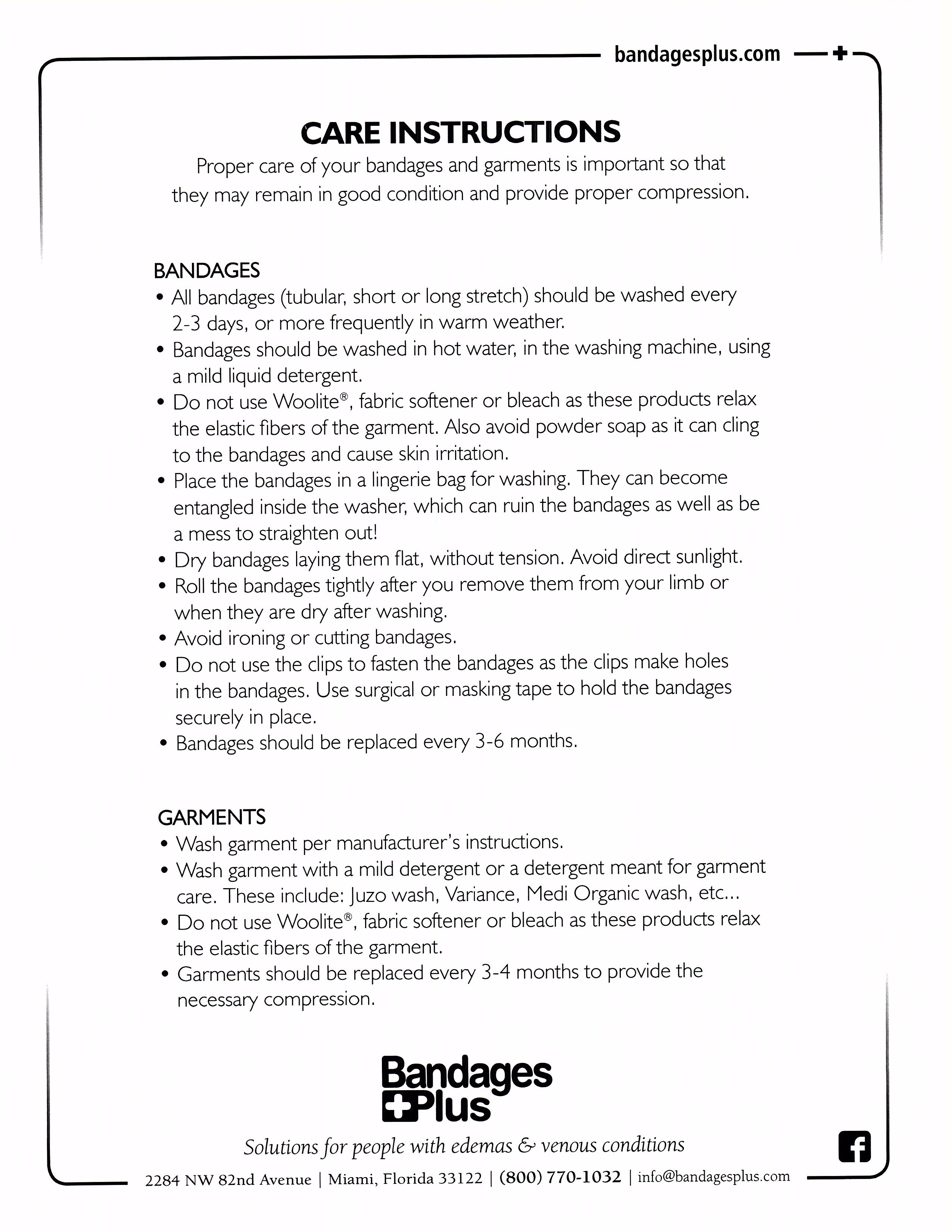
How often should I replace a compression sleeve?
Like any other form of clothing, after repeated use and care, your compression arm sleeve will begin to wear out. To be effective for treating lymphedema, your arm compression sleeve needs to provide the proper amount of arm compression. Compression sleeves should be replaced every 3-6 months (because they eventually lose shape, elasticity and the ability to compress, which can change the pressure that the compression sleeve is able to apply to your arm).
About Bandages Plus
Founded in 1992 by a lymphedema specialist to provide products to patients, therapists, and hospitals, Bandages Plus is now one of the nation's leading suppliers of lymphedema products, compression stockings for venous insufficiency, compression stockings for varicose veins and vein disease, and much more! Located in Miami, Florida, we ship products to hospitals, healthcare facilities and customers across the U.S. We are also a Certified Veteran-Owned Small Business (VSOB).
••••••••••••••••••••••••••••••••••••
Popular search terms for compression arm sleeves and arm compression
Compression Arm Sleeves Lymphedema Compression Sleeve Lymphedema Sleeve Arm Compression Sleeves For Lymphedema Arm Compression Sleeve Compression Sleeve Arm Compression Sleeves Arm Compression Sleeves For Lymphedema Lymphedema Sleeves Arm Compression Garment Arm Sleeve Compression Compression Arm Sleeves For Women Compression Sleeves For Arms Lymphedema Women's Compression Sleeves For Arms Compression Arm Sleeves Medical Medical Compression Sleeves For Arms Compression For Arms Arm Compression Compression Sleeve For Lymphedema Arm Lymphedema Arm Lymphedemaproducts Compression Sleeve Compression Sleeves For Arms Compression Arm Sleeve Compression Sleeve For Arm Forearm Compression Sleeve Arm Compression Sleeves Compression Sleeves For Arms Lymphedema Compression Sleeve For Lymphedema Arm Lymphedema Arm Sleeves Lymphedema Sleeves For Arms Compression Arm Sleeves For Lymphedema Lymphedema Arm Sleeve Arm Sleeves Lymphedema Compression Sleeve For Arm Lymphedema Lymphedema Compression Sleeves For Arms Lymphedema Compression Arm Sleeves Upper Arm Compression Sleeve Medical Compression Sleeve For Arms Medical Compression Arm Sleeves