

Lipedema Symptoms And Types Of Lipedema
Early diagnosis allows for earlier intervention and treatment of lipedema. Unfortunately, lipedema is often misdiagnosed as obesity, as lymphedema or simply dismissed as having experienced weight gain. While a person who suffers from lipedema may also be obese, the two conditions (lipedema and obesity) are not directly related to one another. What is lipedema fat? The painful nodules contained within fatty deposits (lipedema fat) make lipedema different from ordinary body fat. Also, with lipedema in legs there is a clear difference in size between the affected lipedema legs and unaffected feet (or arms and hands). Lipedema vs cellulite - lipedema is also often confused with cellulite which is a common skin condition characterized by lumpy, dimpled skin caused by fat deposits within the skin.
Lipedema can usually be diagnosed during a physical exam and based on your individual and family medical histories. Your healthcare provider may also want to do tests to rule out other health conditions, such as cellulitis, lymphedema or circulatory issues such as chronic venous insufficiency.
The symptoms of lipedema include:
- an even buildup of fat on both sides of the buttocks, hips, thighs, calves or upper arms
- fat that does not go away with diet or exercise
- mild to severe pain
- heavy feeling in the legs
- swelling
- fibrotic bumps inside the fat (feels like there is something under the skin)
- skin that bruises easily
- excess fatigue (feeling more tired than usual)
- in later stages, the development of lymphedema
There are five different types of lipedema that you may experience, with each type being used to describe the location of excess fat within the body. A person can have more than one type of lipedema, determined by the location of the excess fat.
The types of lipedema and related locations of excess fat include:
- Type I lipedema: buttocks
- Type II lipedema: buttocks, hips, and thighs
- Type III lipedema: buttocks, hips, thighs and calves
- Type IV lipedema: arms
- Type V lipedema: calves
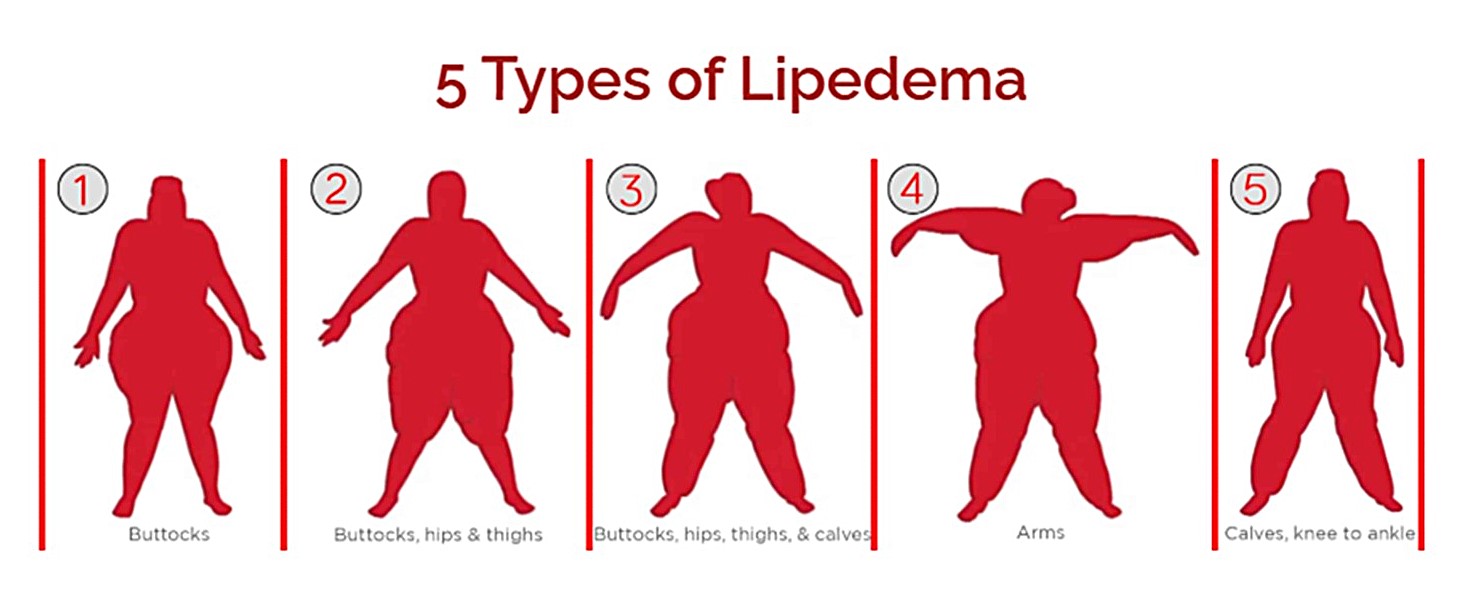
Courtesy of The Lipedema Project
Ready more about understanding and living with lipedema