

Sigvaris Compreflex Compression Wraps: Which Compression Wrap Should I Choose?
Presented by Sigvaris and featuring the Sigvaris Compreflex compression wrap collection of leg compression wraps
The Sigvaris Compreflex Compression Leg Wraps
The Sigvaris brand reflects a broad line of high-quality medical compression garments including compression hosiery, compression stockings and compression wraps for lymphedema, edema, venous disease, as well as a wide range of medical conditions which require compression.
Offered within the full line of Sigvaris compression wraps is the line of Compreflex wraps for legs. Ideal for the treatment of mild to severe cases of lymphedema, edema, lipedema, venous disease, wound management, and other venous conditions requiring compression, the Sigvaris Compreflex calf wraps feature the patented Accutab measuring device which allows you to create the exact, measured amount of compression that you need on your leg.
The different style options of Sigvaris Compreflex leg compression wraps include:
Sigvaris Compreflex Transition calf wrap
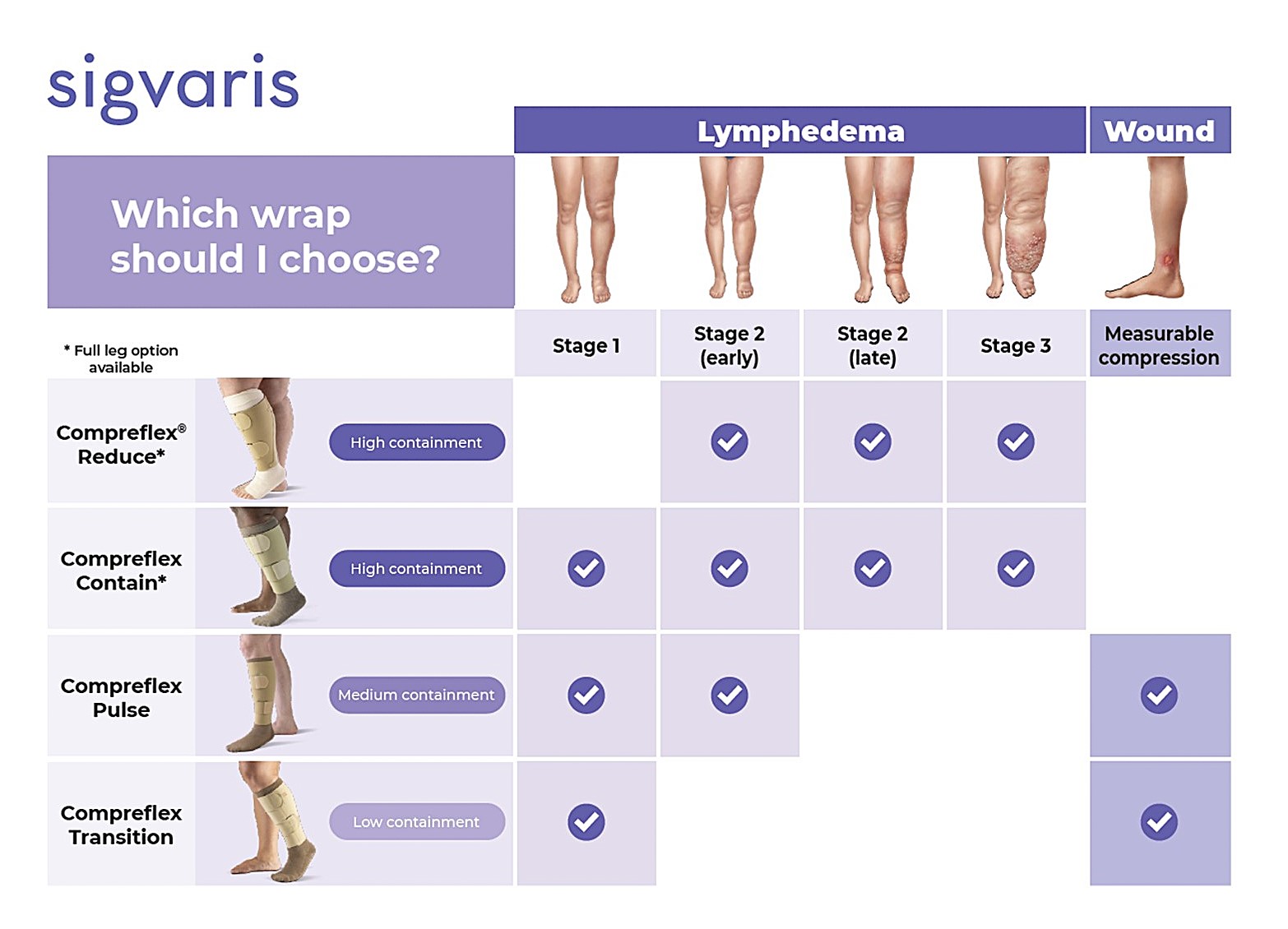
The Compreflex Transition calf compression wrap provides low containment that is ideal for the treatment of mild to moderate Stage 1 lymphedema, as well as for treating venous disorders. Offering accurate compression measurements of 20-30, 30-40, and 40-50 mmHg measured by the patented Accutab, you will find that the Compreflex Transition compression wraps for legs are ideally suited for treating venous leg ulcers resulting from chronic venous insufficiency (CVI).
Read more about the full proof and accurate compression provided by the Sigvaris Compreflex Transition calf wraps.
Sigvaris Compreflex Pulse calf wrap
The Compreflex Pulse calf compression wrap provides medium containment that is ideal for the treatment of mild to moderate Stage 1 and early Stage 2 lymphedema, as well as for treating venous disorders. Offering accurate compression measurements of 20-30, 30-40, and 40-50 mmHg measured by the patented Accutab, Compreflex Pulse compression wraps for legs are also ideally suited for treating venous leg ulcers resulting from chronic venous insufficiency (CVI).
Sigvaris Compreflex Contain calf wrap
The Compreflex Contain calf compression wrap provides 2 times more containment than other Compreflex compression wraps for legs to address lower extremity lymphedema for the treatment of mild to severe lymphedema. Offering accurate compression measurements of 20-30, 30-40, and 40-50 mmHg measured by the patented Accutab, Compreflex Contain compression wraps feature a moderately contoured calf specially designed to fit edematous (swollen) legs.
Sigvaris Compreflex Reduce calf wrap
The Sigvaris Compreflex Reduce leg compression wraps are an innovative compression wrap system that provides high containment for use during the decongestive phase of lymphedema therapy. A replacement for tedious traditional lymphedema bandage wrapping, the Compreflex Reduce compression wraps for legs are easy to size, customizable at the site of care, simple to assemble, and conveniently adjustable during daily wear.
Sigvaris Compreflex Standard calf wrap
The Compreflex Standard calf compression wrap is part of an inelastic compression wrap system designed for the legs and feet. The Compreflex Standard calf compression wrap can be paired with other Compreflex Standard leg compression wraps (knee wrap, thigh and foot wrap) to create a lymphedema wrapping system tailored to your individual needs. Offering accurate compression measurements of 20-30, 30-40, and 40-50 mmHg measured by the patented Accutab, Compreflex Standard compression wraps for legs are also ideally suited for treating venous leg ulcers resulting from chronic venous insufficiency (CVI).
Sigvaris Compreflex Complete calf wrap
The Compreflex Complete calf compression wrap system contains a pair of compressive underliners offering 10-20 mmHg in the foot, ankle and calf, making this the “complete” system for treating venous disorders and mild to moderate lymphedema. Offering accurate compression measurements of 20-30, 30-40, and 40-50 mmHg measured by the patented Accutab, Compreflex Complete calf compression wraps for legs are also ideally suited for treating venous leg ulcers resulting from chronic venous insufficiency (CVI).
In addition to the Sigvaris Compreflex compression wraps, be sure to check out the Sigvaris CoolFlex Compression Wraps - A Novel Compression Solution.
Sigvaris Compreflex Compression Wraps: Which Compression Wrap Should I Choose?
With several options of Sigvaris Compreflex compression wraps available, it may seem overwhelming or confusing to decide which compression wrap to choose from. To help decide which of the Sigvaris Compreflex leg compression wraps is best for you, a side by side comparison of the Compreflex wraps might help you make the best decision.
What Are Compression Wraps For Legs
Adjustable compression wraps, also known as Velcro compression wraps, feature built-in, adjustable straps that allow you to easily adjust the pressure provided by the compression wrap to meet your particular needs. Designed with Velcro, compression wraps are an excellent, user-friendly alternative to traditional multi-layer bandages for providing needed compression to treat a variety of health conditions. The adjustable straps on these compression wraps allow you to easily self-adjust the tightness of the wrap throughout the day as your swelling fluctuates.
Compression wraps provide external pressure to promote fluid circulation, manage edema (swelling), minimize varicose veins, and heal wounds such as venous ulcers. The pressure provided by these compression wraps gently squeezes tissues thereby, promoting fluid movement, preventing fluids from pooling, supporting venous return, and limiting the ability of veins to expand.
In medical and therapeutic applications Velcro compression wraps are primarily used for treating venous disease and lymphedema management. The primary roles of using compression wraps for legs include:
- promote blood circulation: forcing blood in the vein system upward, aiding venous return to the heart
- promote movement of lymphatic fluid: forces lymph fluid out of affected areas, into functioning lymphatic vessels where it can drain
- swelling (edema) reduction: compressing skin tissue to prevent blood and lymphatic fluid buildup
- improve shape of limbs: provides compression that helps improve the shape of the affected limb during lymphedema treatment
- support tissue: stabilizes and supports leg veins, preventing the progression of vein damage into a more severe condition
Venous Disease
Designed to provide gradient pressure to your legs and feet, leg compression wraps have become the foundational treatment for venous disease. Compression wraps for legs reduce leg swelling (edema), help alleviate pain, and promote blood flow (venous return) back to the heart. Additionally, compression leg wraps are critical for helping to heal chronic wounds, such as venous stasis ulcers.
Lymphedema Management
The use of compression wraps have become the gold standard for treating lymphedema in legs and arms. When worn as lymphedema wraps, a compression wrap will provide adjustable gradient pressure for treating and managing swelling (edema) caused by lymphedema.
What Is Venous Disease
Although generally not life-threatening, venous disease affects over 40 million people in the United States. Venous disease is a term that is broadly used to describe a health condition characterized by the inability of the body's venous system to properly pump blood through the veins, back to the heart. Venous disease is a common result of valve dysfunction, that occurs when veins in your legs are damaged, are too weak to do their job, or don’t function properly.
Normally, the valves in your leg veins keep the blood flowing back up to your heart, but with the onset of venous disease these veins can’t manage the blood flow as well as they should, and it’s harder for the blood in your legs to return to your heart. The inability of your veins to properly pump the blood back to the heart through the venous system is referred to as venous insufficiency. In more severe forms, venous insufficiency can progress into chronic venous insufficiency (CVI).
When venous insufficiency develops, the blood begins to pool in your leg veins, leading to high pressure in the veins which causes pain and swelling, may lead to changes in skin color, and finally the development of varicose veins. In more severe cases as venous insufficiency progresses into chronic venous insufficiency, the potential increases for blood clots to form (deep vein thrombosis) and venous leg ulcers to develop on your legs.
What Is The Most Common Vein Disease
Vein disease (venous disease) refers to a range of medical conditions which affect the veins in your body. Venous insufficiency is a form of venous disease and is the result of valve dysfunction, which occurs when the leg veins are unable to effectively pump blood back to the heart. When venous insufficiency develops the result is that the blood begins to pool in your leg veins, leading to high pressure in the veins which causes pain and swelling, and may lead to changes in skin color. Venous insufficiency may lead to the development of:
- varicose veins and spider veins: Milder forms of vein disease, varicose veins are twisted, swollen, bulging veins on your legs, while spider veins are smaller, red, blue or purple veins that appear close to your skin’s surface
- chronic venous insufficiency (CVI): Chronic venous insufficiency is a deeper, more serious form of venous disease and is generally characterized as being an advanced stage of venous insufficiency
- venous leg ulcerations: Venous ulcers, commonly referred to as venous stasis ulcers, are caused by problems with blood circulation within your body and usually are the result of chronic venous insufficiency
- deep vein thrombosis (DVT): Deep vein thrombosis (DVT) is a form of venous disease and represents a serious venous condition characterized by the formation of a blood clot deep within a vein and oftentimes in your leg
What Is Lymphedema
Lymphedema
Lymphedema occurs when the lymphatic system is damaged or compromised, which results in the disruption of the lymphatic flow (of lymph fluid) moving through the body. When this disruption occurs, there is a build-up of the lymph fluid in the fatty tissues just under your skin that causes edema (swelling), which is referred to as lymphedema.
In addition to edema, the accumulated excess lymph fluid can cause your skin to become thickened or hardened, and creates a breeding ground for bacteria that makes the affected area susceptible to skin infections (cellulitis). If left untreated, cellulitis can spread to the bloodstream and create potentially life-threatening conditions. The skin in the affected area may also become compromised, resulting in leakage of the lymph fluid, especially in cases where the skin has become extremely swollen.
Read more about lymphedema.
What Is The Lymphatic System
The lymphatic (or lymph) system is comprised of lymphatic vessels which contain lymph fluid that travels throughout the body and ultimately flows into the lymph nodes, that are the organs which filter and clean the system. These small, bean-sized lymph node glands are found in many parts of the body, including the neck, armpit, chest, abdomen (belly), and groin.
The lymphatic system is an integral part of your body's detoxification and immune system and the lymph system plays many important roles in your body, including:
- helps maintain the right balance of fluids in your body
- transports nutrients and immune cells that help protect you from viruses, bacteria, and other invaders
- filters out germs, toxins and waste
When diseases, infections, injuries or trauma cause your lymphatic system to stop functioning properly, you may develop lymphedema. With this condition, the lymph fluid is unable to properly move within the lymphatic system, and the fluid builds up in your tissues, causing swelling (i.e., lymphedema).
Primary Lymphedema vs. Secondary Lymphedema
While most lymphedema occurs as the result of damage to the lymphatic system, often the result of cancer treatment which increases your risk for developing lymphedema (secondary lymphedema), people can also be born with a compromised lymphatic system (primary lymphedema). Primary lymphedema is caused by rare genetic conditions that prevent the lymphatic system from developing properly.
Cancer treatment increases the risk for developing secondary lymphedema as the cancer treatment procedures can disrupt or damage the lymphatic system. The damage to the lymphatic system often happens with cancer treatments like radiation therapy and surgery, since these procedures can impact your lymph nodes and the surrounding vessels.
Where Does Lymphedema Commonly Develop
Lymphedema usually occurs in and affects the arms and hands, and legs and feet, and while less common, lymphedema can also develop in the head, neck (head and neck lymphedema), breasts and chest (breast lymphedema), abdomen, back, and genitals (genital lymphedema).
The Role Of Compression Leg Wraps For Treating Venous Disease And Lymphedema
What Is Compression Therapy For Treating Lymphedema And Venous Disease
Compression therapy refers to the use of compression garments to apply external pressure to anatomical structures of your body, such as arms and hands, and your feet and legs. The external pressure applied by the compression garments helps:
- promote circulation of blood and movement of lymphatic fluid
- prevent pooling or accumulation of blood and lymphatic fluid
- reduce swelling and inflammation
- alleviate pain or discomfort
- prevent formation of blood clots
- support vein health
- reduce muscle fatigue
Compression therapy is the primary method of treating a variety of health conditions including lymphedema and venous disease.
What Medical Compression Products Are Used For Compression Therapy
There are a variety of different products which are used to provide compression therapy:
- short stretch compression bandages: primarily used in compression bandaging for lymphedema applications
- compression stockings: available in knee-high, thigh-high and pantyhose styles, compression stockings are the most common type of compression garment
- compression arm sleeves: a traditional means of providing arm compression and support to the arm to manage and treat lymphedema of the arms
- compression wraps: easy to apply and adjust, a compression wrap offers an alternative to traditional compression stockings and arm sleeves, especially for those who may not be able to put on or wear traditional compression garments
What Are Compression Wraps
A compression wrap is a "compression alternative", which provides a wider range of compression than other traditional compression garments. Easy to put on and use, a compression wrap provides steady and comfortable resting compression as well as higher working compression when you are active.
A compression wrap can be described as a snugly fitting, elastic garment that is worn to provide external compression through controlled, graduated pressure which is beneficial for a variety of applications. Compression wraps are primarily used to prevent and reduce swelling, improve blood and lymphatic flow, and to help push excess fluid out of injured or congested areas. Designed with adjustable bands with Velcro closures, compression wraps are easily adjusted to accommodate changes in swelling and meet individual needs.
See the wide variety of compression wraps that we offer.
What Are Compression Wraps Used For
Velcro compression wraps have a variety of health and medical treatment applications. By providing adjustable, controlled pressure, a compression wrap is indicated for use in treating a variety of health conditions, including:
- chronic swelling and lymphedema: when used as lymphedema wraps, a compression wrap will be used to manage lymphatic fluid buildup and prevent severe swelling (edema)
- venous disease: compression wraps for legs provide support to weak vein walls and help promote blood flow upward to the heart through the venous system, preventing the pooling of blood in your feet and legs
- chronic wound and venous ulceration healing: compression leg wraps help improve blood circulation and blood flow, pushing surface blood back into the deep vein system, helping to aid the healing of venous leg ulcers
How Do Compression Wraps Work
By providing adjustable, controlled pressure, compression wraps limit the ability of veins to expand, forcing blood to pump more efficiently back to the heart instead of pooling in your legs and feet. Compression wraps typically provide dynamic pressure - meaning that they "tighten" when your muscles move and then "ease up" when you are resting. This dynamic pressure creates a form of “pumping action” that helps to move deoxygenated blood and accumulated lymph fluid out of your legs, while allowing nutrient rich oxygenated blood to flow back into your legs. The controlled pressure provided by compression wraps also helps manage swelling by preventing fluid from returning to the tissues once it has been pushed out.
What Does Graduated Compression Mean With Compression Wraps
Velcro compression wraps are designed to provide adjustable graduated pressure, which means that the compression wrap is tighter at the wrist or ankle, and becomes gradually looser toward the upper arm or leg. These Velcro compression wraps are able to provide different levels of adjustable pressure, with each level determining how much pressure the compression wrap will provide. In simple terms, the higher level of compression, the tighter the compression wrap will be.
The compression applied by the compression wrap is measured in mmHg (millimeters of mercury), which is the same measurement that is used for measuring blood pressure. The four levels of pressure in U.S. manufactured compression wraps are:
- class 0 compression wrap (exerts 15 mmHg to 20 mmHg of pressure)
- class 1 compression wrap (exerts 20 mmHg to 30 mmHg of pressure)
- class 2 compression wrap (exerts 30 mmHg to 40 mmHg of pressure)
- class 3 compression wrap (exerts 40 mmHg to 50 mmHg of pressure)
What Level Of Compression Should I Choose For My Compression Wrap
Although compression wraps are able to provide different levels of adjustable pressure, compression wraps are generally designed to provide a range of compression based on their intended use. When choosing a compression wrap it is very important to make sure that the individual compression wrap that you are considering will be able to provide you with the level of pressure that you need. Generally, milder cases of lymphedema and venous disease will require compression wraps that are able to provide class 1 or 2 compression, while more severe cases of lymphedema will require compression wraps that can provide class 3 compression. Compression wraps that exert as little as 15 mmHg to 20 mmHg are suited for very mild cases of lymphedema or venous disease, or those who are at risk of developing lymphedema or venous disease.
The following are the different compression classes that compression wraps can provide, and what they are typically recommended for:
- Compression Class 0: 15 - 20 mmHg – for those at risk for lymphedema, treating spider veins and mild venous conditions
- Compression Class 1: 20 - 30 mmHg – for those at risk for lymphedema or for mild lymphedema, for treating visible varicose veins, achy legs and moderate venous conditions
- Compression Class 2: 30 - 40 mmHg – for those with moderate or severe lymphedema, chronic venous insufficiency, and treating venous ulcers
- Compression Class 3: 40 - 50 mmHg – for those with severe or hard to control lymphedema and advanced venous disease
You should always speak with your healthcare provider regarding the best compression level for you and your individual health condition.
The Role Of Compression Wraps In Lymphedema Prevention
If you have had lymph node removal, or are recovering from cancer treatment, you are more at-risk for developing lymphedema. Lymphedema cannot be cured, but there are a number of steps that you can take to help prevent lymphedema if you are in the high risk category for lymphedema developing:
- Diet and exercise to maintain body weight
- Avoid vigorous or excessive exercise
- Maintain skin health and protect your skin from injury or infection
- Avoid construction or pressure on your arms or legs
- Avoid extreme temperatures or sun exposure
- Elevate your arms or legs
- Wear light compression during air travel and long periods of inactivity
While wearing compression wraps as lymphedema wraps is a common treatment for lymphedema, a compression wrap can also be proscribed as a preventative treatment against the development of lymphedema. Studies have shown that wearing compression can help prevent the development of lymphedema, reduce symptom severity, or stop progression of lymphedema into a more severe stage which helps you avoid chronic lymphedema.
Read more about cancer treatment and the risk for lymphedema.
The Role Of Compression Wraps In Venous Disease Prevention
By focusing on vein health to prevent circulatory problems, you can help ensure proper blood circulation, promote overall leg health and reduce the chances of developing circulatory-related vein disease. Generally speaking, a healthy circulatory system will also support physical activity, mental sharpness, and a general sense of well-being which directly impacts your overall quality of life. Healthy veins help ensure:
- that your circulatory system functions properly
- a strong body immune response to fight infection
- optimal organ and muscle function
- faster wound healing if it should occur
Vein disease is a progressive disease and once it exists venous disease cannot be cured. If the signs and development of venous disease are ignored, left undiagnosed and untreated they will become worse and can lead to more serious health conditions such as chronic venous insufficiency, venous ulcers, deep vein thrombosis (DVT) where blood clots form in a deep vein, and the development of chronic wounds.
Read more about vein health and its importance in preventing circulatory problems.
Bottom Line: Crucial Tips for Success For Wearing Compression Wraps For Lymphedema And Venous Disease
To ensure that you receive the maximum benefit from your compression wraps for legs / lymphedema wraps, we recommend you consider the following steps:
Choose the proper compression: Consult with your healthcare provider to ensure that you choose a compression wrap that provides you with the correct level of gradient compression for your particular needs.
Ensure you have a proper fit: This is one of the most important steps for effective compression therapy for lymphedema and venous disease. Wearing a poorly fitting compression wrap can actually make your condition worse. If your compression wrap is too tight, it can:
- restrict circulation and lymphatic flow
- increase swelling
- cause tingling or numbness
- damage soft skin tissue
When compression wraps are too loose, they can:
- provide ineffective compression therapy
- slide, causing skin irritation, rashes or abrasions
Actively wear your compression wrap: Generally, compression wraps should be worn during all waking hours, and especially during periods of activity.
Practice nighttime care: If your healthcare provider prescribes the need for nighttime compression, make sure that you loosen the adjustable bands of your compression wrap to manage swelling while you are asleep and while resting.
Keep your compression wrap clean: Proper care of compression wraps will help extend the life of the garment and provide you with a better compression therapy result. Frequent washing of your compression wrap will remove built-up sweat and body oils that cause the garment’s elastic fibers to break down. Machine drying your compression wrap, will tighten the fabric, enabling the wrap to bounce back to its original compression strength.
Replace your compression wrap regularly: The compressive elastic fabric in your compression wrap will eventually stretch out and break down with daily use and washing. As your compression wrap stretches out, it will begin to lose effectiveness and must therefore be replaced every 4 to 6 months.